For many years, our work at Shilpa Sayura Foundation has been rooted in communities, designing and delivering technology education for girls who often have little access to these opportunities. Through this work, we have learned a lot about what helps girls engage with computing, but much of that learning has stayed within programmes, reports, and internal documentation.
At the same time, most computing education research continues to come from well-resourced settings, often in English-dominant environments. This leaves a gap in understanding what works in contexts like rural Sri Lanka, where access, language, and social expectations shape how girls experience technology.
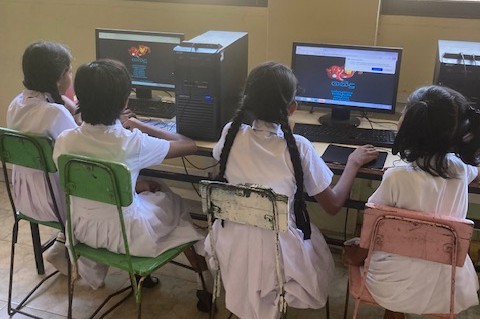
Our recent paper, From Uncertainty to Possibility: Early Computing Experiences for Rural Girls, is one attempt to document these experiences more systematically and share them beyond our programmes.
The study draws on an 8-week computing programme with 162 girls aged 10 to 14 across five rural locations. At the start, many participants had little or no experience with computers. Over 70% did not have access to a computer at home, and more than half reported feeling uncomfortable using one.
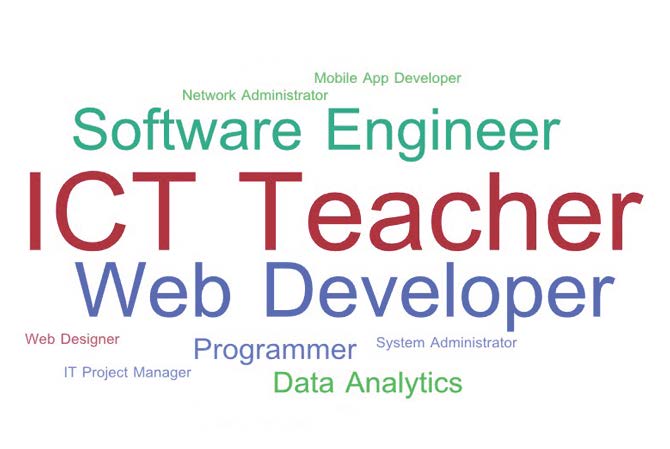
By the end of the programme, we observed a measurable increase in programming self-efficacy. While the change was modest, it was meaningful in a context where many girls were starting from zero. We also saw a shift in how girls described their future careers. Before the programme, most responses were undecided or focused on roles like doctor or teacher. After the programme, more girls began to mention technology-related careers such as software engineering and web development.
What stood out most was how these changes happened.
Girls often spoke about gaining confidence through small, practical successes. As one student shared, “After I made the simple version, I tried adding new things.” This kind of progression, from completing a basic task to extending it on their own, played a key role in building confidence.
Teachers also noticed this shift. One teacher reflected that “students who do well help other students,” describing how peer learning became part of the classroom culture. Instead of relying only on facilitators, girls began solving problems together.
Another important factor was language. Delivering the programme in Sinhala and Tamil reduced the barrier to entry, especially in the early stages. Students were still exposed to English programming terms, but in a way that was connected to meaningful tasks rather than abstract instruction.
These insights reinforce something we have seen repeatedly in practice. Confidence does not come from a single moment. It builds through small wins, social support, and the ability to connect learning to one’s own context.
n 2024, we began to formalise this work by establishing a research arm within Shilpa Sayura Foundation. The goal is simple: to ensure that what we learn through practice is not lost, and that it can contribute to wider conversations in computing education.
This paper is our second publication as part of that effort. It is one step toward making community-based knowledge more visible, especially from contexts that are often underrepresented in research.
Even though we were not able to be present at CHI in person, it is meaningful to see this work included and to know that these experiences from rural Sri Lanka are part of the discussion.
A big thank you to our co-authors and to the students, teachers, and communities who made this work possible.
Recent Comments